Who Pays for Environmental Damage?
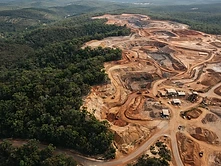
Compensatory afforestation promises to replace what is cleared. In mountain forests, the replacement rarely performs the same ecological work.

Documented facts
Compensatory afforestation under the Forest (Conservation) Act requires equivalent land and is administered through the Compensatory Afforestation Fund (Act texts, 1980 and 2016).
Documented evidenceThe 2023 amendment to the Forest (Conservation) Act changed the scope of lands requiring central approval (amending Act).
Documented evidenceCompensation is measured primarily in land area, not ecological function (MoEFCC guidelines).
Documented evidenceGram sabhas hold a recognised consultative role in forest and biodiversity decisions (Forest Rights Act 2006; Biological Diversity Act 2002).
Documented evidence
Timeline
- January 1, 1927Indian Forest Act consolidates forest management and rights regulation.Documented evidence
- October 25, 1980Forest (Conservation) Act requires central approval for diversion of forest land.Documented evidence
- July 1, 2016Compensatory Afforestation Fund Act establishes the national fund and state shares.Documented evidence
- August 4, 2023Forest (Conservation) Amendment Act changes the scope of protected forest land.Documented evidence
Geographical context
Kashmir's forests climb from valley floor to alpine pasture, and the same slopes regulate water for settlements far below. Wildlife corridors connect protected areas across ridgelines and passes, and their value depends on continuity rather than on the size of any single reserve. Where a road, a plantation or a settlement interrupts a corridor, the effect is not local: it can isolate a population that was previously connected to others.
Scientific context
Forest loss in mountain landscapes has two distinct effects. The first is habitat: species that need dense understorey or old trees lose the structure they depend on. The second is hydrological: forest cover affects infiltration, erosion and the timing of water reaching streams. Restoration ecology distinguishes between planting trees and restoring function. A plantation of a single fast-growing species can raise canopy cover while reducing the structural diversity, seed sources and soil biology that native forest provides.
Applicable environmental law
- · Indian Forest Act, 1927 — forest management and regulation of rights
- · Jammu and Kashmir Forest Act, 1987 — state forest protection and concessions
- · Forest (Conservation) Act, 1980, as amended in 2023 — approval for diversion and compensatory conditions
- · Compensatory Afforestation Fund Act, 2016 — national fund and state shares
- · Biological Diversity Act, 2002 — access and benefit-sharing, and local body consultation
Community response
Forest-dependent households — graziers, fuelwood collectors, pastoralists — experience restoration programmes through restrictions on access. Where planting is fenced, the loss of grazing can displace pressure onto adjacent land rather than relieve it. Local institutions argue that restoration succeeds when it is designed with the people who use the landscape, and fails when it is designed only for an area target.
Institutional response
The forest department holds the management mandate, the central government approves diversions, and the compensatory fund channels money to the state. Gram sabhas have a legally recognised role in forest and biodiversity decisions. The institutional weakness is measurement. Obligations are expressed in hectares planted; performance is expressed in survival percentages at short intervals; neither captures whether the forest functions as before.
Current documented status
Plantation-based programmes continue, with monitoring focused on area and short-term survival. Independent assessment of corridor function and long-term ecological equivalence remains limited, and the 2023 amendment to the forest law is itself subject to legal challenge.
Restoring a corridor, not a plantation
Reforestation is often measured in saplings planted. A corridor is measured in whether anything can cross it.
Fragmentation analysis locates the places where habitat patches are too far apart or too disturbed for species to move between them.
Sequence follows widely used forest-landscape-restoration guidance (IUCN/UN Decade). It is a method, not a report of any specific project in Kashmir.
What the law obliges, and where it stops short
India's forest law is strong on area and weak on function. That mismatch is the centre of the restoration argument.
Forest (Conservation) Act
Requires central approval before forest land is diverted to non-forest use, and imposes compensatory conditions.
Implementation gap: Compliance is measured largely in land area. The 2023 amendment also changed which lands fall within scope, which is itself contested.
Statutory descriptions are simplified for readability. The 2023 amendment's scope and its litigation are live questions — check the current position before relying on it.
Three terms carry most of the argument. Open them as you read.
Draft the obligation
A policy proposal exercise. There is no single correct answer; the point is to see what each design choice makes visible.
You are drafting a restoration obligation for a project that will clear 100 hectares of natural forest. Which obligation would you write?
Illustrative scenario written by EJA editors from documented conditions. It is not survey data and reports no participant responses.
Sources & further reading
- Forest (Conservation) Act, 1980 and the 2023 amending ActMinistry of Environment, Forest and Climate Change, 2023 · legislation
- Compensatory Afforestation Fund Act, 2016Government of India, 2016 · legislation
- Restoration principles and the UN Decade on Ecosystem RestorationUnited Nations Environment Programme, 2021–2030 · international framework
- Forest landscape restoration principlesIUCN, 2024 · technical guidance
Links open the publisher's own page. Figures are quoted with their year and scope; where evidence is contested or incomplete, the story says so rather than filling the gap.
Similar stories around the world

Contributors may withdraw permission or request corrections at any time. Request a correction.